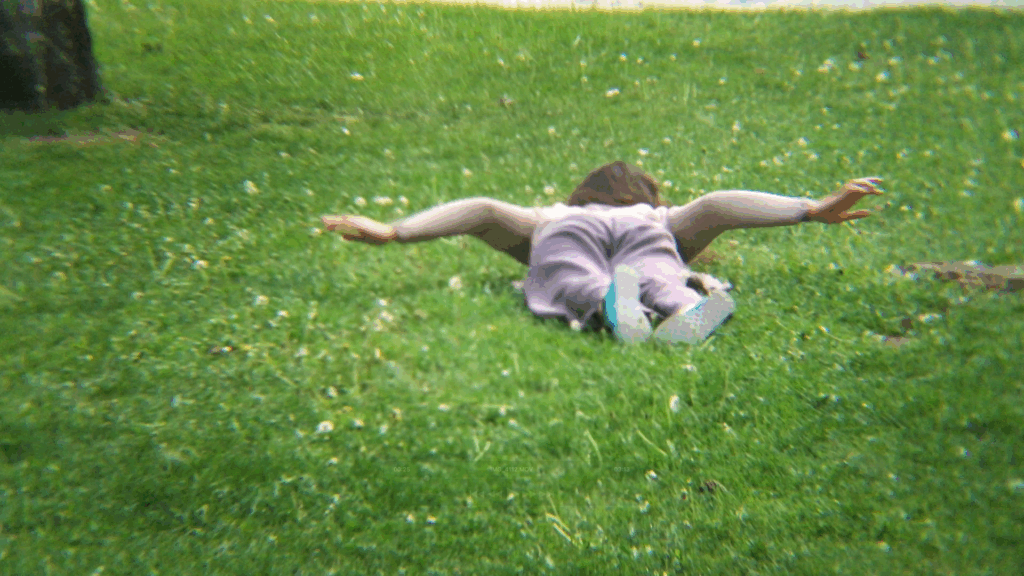
Afeji
There is something I cannot define in a proper manner yet. For now I call it Afeji. I borrow the rhythm of a word like nostalgia, which I understand as a yearning for a past experience. But Afeji is not exactly that. The name is provisional. It is a combination of affect and logia (a “discourse” or “account”), because what I am trying to name is the gap between an intensity in the body and the language that would make that intensity intelligible At the moment, it feels like this: nothing can call me, not a street, not another neighbourhood, not a patch of grass, not the sound of a bird or a tree, except the small lies I might be telling myself. My body becomes rigid. And yet there used to be times when a particle of wind would touch some part of me and try to pull a memory out, as if the body were a drawer that could still be opened from the outside.Sometimes the memory comes, but I cannot locate what its feeling actually was. Sometimes I tremble: there is a feeling, but I cannot summon, inside my mind, the memory that would explain it. In those moments, two things coexist. There is the pleasure of the encounter that is somehow present, and at the same time the sadness of not being able to remember it. I have started making playlists of songs that are both pleasurable and sad, because that mixture seems to be the closest form I can give to this state.If nostalgia is longing for the past, Afeji might be something like the mind’s helplessness in front of the body’s capacity to be affected. Or perhaps it is not that either. But I keep returning to this structure: I am filled with a mode of feeling, yet I cannot find the lived experience to which it belongs. The affect arrives, the body registers it, but the story that would anchor it does not come. What remains is an intensity without an address, a sensation without a scene.That suspended condition, where affect is present but its experiential ground cannot be retrieved, is what I currently call Afeji.
There is a line from a poem that keeps returning to me: “I live the deepest form of longing without knowing what I miss.” I think this is precisely the condition I am trying to describe.What produces it does not seem to belong to logic, at least not to logic understood as reasoning that leads to an object of knowledge. It is not that I cannot name what I miss; it is that the missing does not present itself as a knowable object in the first place. The longing arrives first, fully formed, and only afterwards do I search for a cause, a scene, a memory to attach it to.This makes me suspect that what is being remembered is not an event in the usual sense. Perhaps it is something more granular and more material: a memory of the skin. Or a single hair on my arm or chest that resonates with the wind. A micro-contact that returns as intensity, not as representation. Perhaps my eyes once received light in a particular way, and my body registered it as pleasure, but the experience never became a stable image in memory. It remained below the threshold of narrative, and yet it persists as a capacity to be moved.If so, what returns is not “content” but a disposition: a bodily readiness, a tactile or optical trace, an affective remainder. The feeling is real, but it does not lead back to a story. It is like an echo without a source, or an address without a map. Longing, in this sense, is not directed toward the past as a retrievable scene; it is directed toward a sensation that the body once held, and that language cannot locate.This is why I hesitate to treat it as knowledge. It belongs to another register: not what I can explain, but what my body can still receive. Afeji, then, might name this interval: the moment when affect insists, while the memory-image fails to appear.